
Braille 101: Making Your Business Inclusive

In today’s dynamic business landscape, championing inclusivity isn’t just a gesture; it’s a cornerstone of success.
As businesses strive to cater to diverse customer bases, integrating braille emerges as a powerful tool to bridge the accessibility gap for people who are blind or partially sighted.
From retail outlets to bustling fast-food chains and office spaces, the utility of braille transcends sectors.
Braille not only bridge gaps but creates environments of empowerment and equality.
Want to learn how? Let’s dive in!
Braille Transforms Shopping Experiences

If you’re not among the 1.3 billion people living with a disability, you may not have thought about how easily you interact with physical spaces and technology.
Imagine walking into a retail store and not being able to effortlessly navigate aisles or discover products independently.
According to research by CNIB, 81% of people who are blind or partially sighted reported that inaccessible signage is a significant barrier to their mobility and independence.
Incorporating braille signage within retail spaces dramatically changes the shopping experience for people who are blind or partially sighted.
Braille signage in retail spaces goes beyond directions; it prioritizes accessibility, elevates customer satisfaction, and defines inclusive businesses.
Braille in Retail and Fast-Food Chains
Over 8 million Canadians live with a degenerative eye-disease, and 1.5 million Canadians live with sight loss. This number is expected to soar by 33% by 2050.
People with sight loss dine out like everyone else, and by implementing braille and large print menus, coupled with accessible ordering systems, their experience can be significantly enhanced.
Restaurants can take it one step further and help partially sighted and blind diners by also making sure their websites and apps are compatible with voiceover software so the menu can be read out loud.
Read how one man is lobbying to bring back braille menus.
Braille in Banking, Payments, and FinTech
Integrating braille into the banking, payments, and FinTech sectors serves as a potent tool in fostering accessibility and security for customers who are blind or partially sighted.
Simple tasks like distinguishing cards in a wallet can become challenging for people with vision loss. This often forces them to seek help or disclose sensitive information to strangers, compromising their independence.
Enabling Secure Transactions
For people who are blind or partially sighted, performing sensitive transactions securely is paramount.
Braille plays a pivotal role in providing an additional layer of security and independence.
Notably, innovations in the banking industry have emerged to cater to customers with sight loss.
Institutions like Westpac have introduced accessible cards tailored for people who are blind or partially sighted. Westpac’s new suite of cards incorporates tactile features such as braille markers and distinct cutouts—square, round, or triangular—on credit, debit, and prepaid cards respectively.
These modifications aim to facilitate easier identification, ensuring that customers don’t need to rely on assistance while making payments.
Westpac’s initiative represents a significant stride towards financial inclusivity and security for all customers.
The Rise of Accessible Payment Solutions
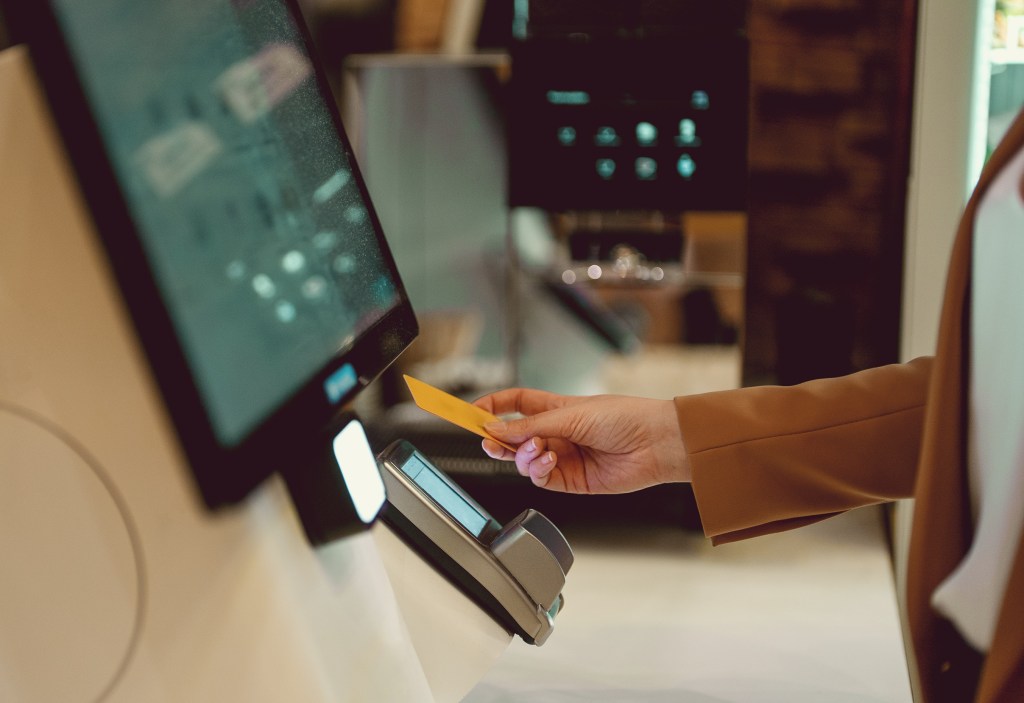
For Canadians with sight loss, daily purchases often necessitate reliance on others due to inaccessible payment terminals, eroding their financial independence.
Existing terminals primarily rely on visual cues, creating barriers for those with sight loss. Recognizing this, CNIB collaborated with Moneris Solutions Corporation, supported by the Government of Canada, to develop a revolutionary accessible payment terminal.
Moneris upgraded its software to enhance accessibility, offering features like increased font size, brightness adjustment, color contrast inversion, and audio feedback.
Though pandemic constraints affected demonstrations, CNIB’s virtual and in-person showcases yielded positive feedback.
This innovative terminal transforms the shopping experience, allowing individuals with sight loss to independently navigate transactions.
Users activate the accessibility mode on Moneris Core terminals by either touching the accessibility icon or pressing the “5” key, initiating step-by-step instructions for completing transactions without compromising sensitive PIN information or seeking external assistance.
Want to see how the accessible terminal works? Watch the video here.
Tactile Signage & Alternative Formats
![Two employees engaged in discussion in a brightly lit office space. One of the employees, a middle-aged woman with short, grey hair, uses a white cane.]](https://cnib-beyondprint.ca/wp-content/uploads/2023/12/AdobeStock_332362123-1024x683.jpeg)
The unemployment rate for persons with sight loss is triple the Canadian general unemployment rate.
Despite the relative ease of making the workplace accessible for people with sight loss, a lack of workplace accommodations is a major barrier to participating in the workforce.
An alarming 75% of users with a disability, indicate moderate to severe accessibility issues with PDF documents. An additional 40% of Canadians with disabilities face barriers reading and understanding written materials.
Within workplaces, use of tactile signage and providing information in alternate formats goes beyond compliance; it fosters true inclusivity and unleashes the potential of differently abled employees.
Some examples of alternate formats for employees are:
- Accessible file formats, including PDFs and EPUBs
- American Sign Language (ASL) materials
- Closed captioning
- Braille transcription
And more…
Beyond Built Environments: Parks & Trails
Public spaces like parks, trails, and outdoor facilities are vital arenas for inclusivity.
The World Health Organization estimates that approximately 2.2 billion people worldwide experience some degree of sight loss.
Ensuring braille presence in public spaces aids this substantial demographic in navigating the built environment independently. The repercussions of excluding people with sight loss from exploring nature and the great outdoors, is undeniably detrimental.
Transit: Enhancing Mobility and Independence
Transit authorities, airports, and local and regional transit systems play a pivotal role in accessibility.
By including tactile information through signage and pathways, transit authorities can enhance the mobility and independence of commuters with disabilities.
By incorporating braille signage, TransLink is prioritizing inclusivity and facilitating easier navigation for all passengers, promoting a more equitable public transportation experience.
How to incorporate braille into your Business

Braille serves as an efficient method to ensure signage accessibility for people who are blind or partially sighted.
They present a simple, economical means of delivering vital information to people with print disabilities.
Braille can be implemented on a variety of surfaces like metal, plastic, and wood (just to name a few) and these signs can be integrated into virtually any public space. At CNIB Beyond Print, we provide certified transcription into braille and high-quality embossing of dots on a variety of materials to aid braille readers in accessing information and navigating efficiently.
CNIB Beyond Print and The Way Forward
At CNIB Beyond Print, we champion inclusivity through braille and tactile solutions, aligning with CNIB’s Strategic Plan for safe and accessible journeys, and also ensuring equitable access to information for people with print disabilities.
In 2023 and beyond, creating an inclusive customer experience isn’t just a choice; it’s a necessity. Braille signage and tactile communication emerge as powerful tools for furthering inclusivity across various sectors for individuals who are blind or partially sighted.
Visit our website to discover how we’re shaping an inclusive future through tactile signage and braille integration.