
Braille Reimagined: eBraille and the Monarch
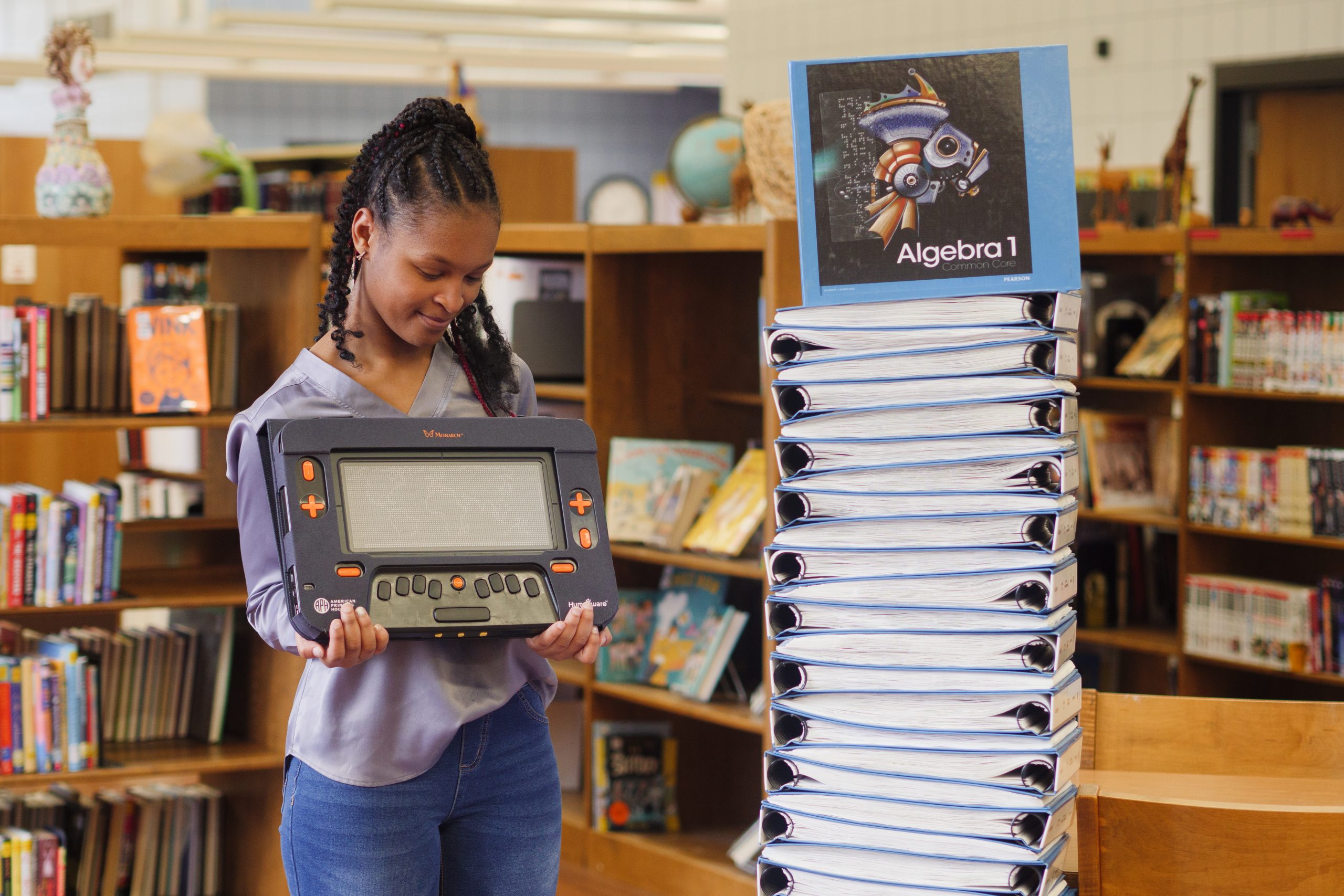
The world of braille is undergoing a revolution!
Enter eBraille, a new digital standard, and the Monarch, a dynamic tactile device by HumanWare, poised to transform how students who are blind or low vision access information.
This blog delves into an interview with Peter Tucic, Director of Strategic Partnerships at HumanWare and a champion for braille accessibility, and Christen Thomas, Director of CNIB Beyond Print and Co-Chair of the Monarch Core Champions Committee.
Ready to explore the exciting possibilities of these advancements? Read on!
The eBraille Standard

Imagine a braille experience that adapts to your needs. eBraille achieves just that.
Unlike traditional formats, eBraille offers dynamic content that seamlessly adjusts to different braille displays and enables navigation and tactile graphics as well as text.
So, no more static files restricted by device size!
The Accessibility Gap
Christen asked Peter, “What led to the pursuit of creating the eBraille standard, also called eBRL, and what gap in accessibility does it address?”
Peter explained that current digital braille files lack flexibility. “A BRF (braille ready format) file is static and is created to be consumed when embossed on physical paper or by a user of a specific braille display length. BRF files do not allow for the reflowing of text for someone reading on a larger or smaller braille display than what has been identified in the file parameters.”
He further highlighted the difficulties in navigation, embedding tactile graphics, and retaining document markup. “This host of factors amongst many others led to the undertaking of this project thanks to the visionary leadership of the American Printing House for the Blind in the United States.”
How eBraille Works
We asked about eBraille’s technical advantages: “How does the eBRL standard enhance the efficiency of braille file formats compared to previous standards? Could you explain how eBRL manages complex content, such as tactile graphics and multi-line text?”
Peter outlined several key improvements. “eBraille files will allow for several points of improvement over existing digital braille files. Having markup that will allow a user to quickly and efficiently navigate through elements of a document would be the most noticeable difference, allowing for navigation of content similar to navigating an EPUB file or webpage.”
He added, “Previously, a braille transcriber would create tactile graphics separately for manual placement within an embossed book or document. With the eBraille standard, tactile graphics can now be inserted by the transcriber directly into the document for embossing and viewing at the same time.”
This eliminates the need for supplemental tactile graphics and enables instant access to images within the document. Regarding multi-line text, Peter adds, “the reflowing of text will ensure that a user of a device can continuously read content regardless of the number of refreshable braille cells that their particular device has.”
Widespread Adoption
Christen asked about the steps being taken to encourage the adoption of eBRL: “What steps are being taken to encourage widespread adoption of the eBRL standard among publishers, educators, and device manufacturers?”
Peter explained the extensive collaboration involved: “There are over 40 partner organizations that have participated in the initial development of the standard… While the initial braille rules are focused on the BANA (Braille Authority of North America) standards, the standard will continue to evolve to include other braille rules… Extensive work is also being put into the development of pilot programs with key publishers to roll out sample content throughout 2025 and beyond. Several device manufacturers are also working on the support of eBraille files beginning with the Monarch dynamic braille and tactile graphics display in early 2025.”
Impact on Content Delivery
Christen asked Peter about the impact of the standard: “How will the eBRL standard impact content delivery for education, entertainment, and professional use?”
He responded, “The ability to have a formatted digital braille file with navigable elements will benefit all braille users regardless of the method by which they access content… Readers of hard-copy files will now have the ability for any accompanying tactile graphics to be positioned at the correct locations within embossed files, and readers of multi-line displays will now have the added benefit of spatial content portrayed correctly as it would be on a physical piece of paper.”
Launch and Implementation
Christen wondered about the launch and availability of tools: “When will it launch, and how can people produce it, is there a conversion tool available?”
Peter clarified, “The first public specs of the standard were published in August of 2024. A conversion tool is going to be made available to partner organizations in early 2025… The goal is to have a tool available for a user to seamlessly convert an existing BRF file into an eBraille file with minimal effort around the middle of 2025. The ability to create Ebraille files natively would then follow using braille translation software.”
A Glimpse into the Future
Christen inquired about the future of eBraille: “What advancements in technology or accessibility do you foresee for eBraille and tactile technology in the next decade? How might the eBRL standard evolve to accommodate new use cases or technological innovations?”
Peter shared his vision: “As we are on the cusp of what feels like a turning point in multi-line braille technology, I would foresee devices becoming more agile in their ability to render multi-line content… I also would believe that as the technology progresses, we will have more detail available on graphics displays similar to the increase in pixelization over time on digital screens… eBraille is a living standard like HTML and EPUB. What this means is that we can update the standard as technology evolves.”
All about The Monarch
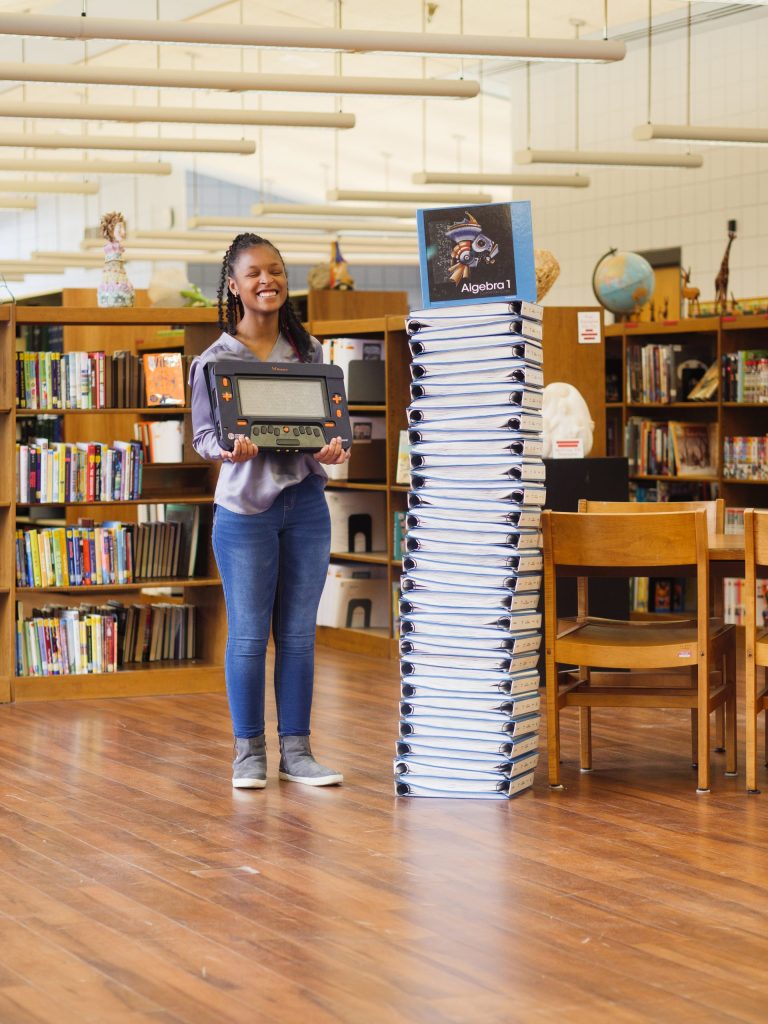
Christen asked about the Monarch’s unique features: “How does the Monarch differ from other braille devices on the market? Could you describe the most innovative features of the Monarch and how they enhance accessibility for users?”
Peter explained, “The Monarch is the only tactile device capable of showing braille and tactile graphics simultaneously on the same tactile array… The importance of the Monarch’s ability to store and view tactile graphics that would otherwise take up large amounts of physical space cannot be understated… Additionally, having the ability to both forward and back translate braille Nemeth code or UEB math content between sighted teachers and students is an incredible step forward in keeping up with peers across STEM subjects.”
User Experience
Christen asked about the Monarch’s user experience: “How does the Monarch address the needs of students, professionals, and casual users differently?”
Peter outlined the device’s versatility: “The Monarch will greatly enhance access to information for users regardless of where they may be in their life journey… Additionally, braille terminal support for screen readers will be a significant enhancement on the Monarch and we are working to implement this in 2025.”
Early Reception and Impact

Christen asked about user feedback and the Monarch’s potential impact: “How has the Monarch been received by the blind and low-vision community during testing or early use? How do you envision the Monarch transforming education and employment opportunities for braille users?”
Peter shared positive feedback from field testing: “The Monarch has had over a year of field testing… The feedback has been extremely positive… The Monarch will provide access to exponentially more content in real time than has ever been available in a refreshable braille environment… Because we have access to a software development kit available to trusted partners, we will see innovative programs developed that present tremendous potential.”
Affordability and Accessibility
Finally, Christen addressed the issue of affordability: “Are there plans to make the Monarch available at an affordable price point to ensure broader accessibility?”
Peter affirmed the commitment to affordability: “We are continuously seeking ways to subsidize the cost of the Monarch… We know that the price is perceived as high at first glance, but we are proud of the years of development that went into the creation of this device and believe that the benefit is worth far more than the physical metrics of providing more than ten times of the amount of cells offered on many displays out there today.”
The Future is Braille-iant

eBraille and the Monarch herald a new era of accessibility and empowerment for people who are blind, Deafblind, or low vision.
With continuous development and collaboration, the future of braille is brimming with possibilities!
We believe that access to information in accessible formats is a basic human right.
Therefore, CNIB Beyond Print is proud to champion these advancements and advocate for a future where braille thrives!
About Peter Tucic
Peter Tucic is the Director of Strategic Partnerships at HumanWare. He works closely with key organizations throughout the field of vision loss at both local and national levels relating to their optimal use of HumanWare’s blindness assistive technology. Peter graduated from the University of Illinois at Chicago with a Bachelor of Arts Degree in History. Peter began his work in the field of Assistive technology at the Chicago Lighthouse where he ran the National Assistive Technology Help Desk and trained clients through the state of Illinois. In addition to consistently presenting at several annual conferences, Peter has also been published in Closing the Gap magazine and regularly creates written and video tutorials for a wide array of HumanWare blindness products.