
Revolutionize Retail with Braille Labels

Introduction
In a world striving for inclusivity, it’s crucial for retail spaces to embrace accessibility in all aspects of their operations.
One often-overlooked area is the provision of information for customers who are blind, Deafblind, or partially sighted.
By implementing braille labels and product information, businesses can open their doors to a significant segment of the market that is grossly overlooked.
Want to learn how? Read on!
The Importance of Braille in Retail
Braille is not just a series of raised dots; it’s a lifeline for millions of people who are blind, worldwide.
It’s a tactile writing system that enables them to read and navigate the world around them independently.
In retail settings, braille labels and information provide vital assistance for shoppers who are blind, allowing them to identify products, locate landmarks, understand pricing, and make informed purchasing decisions.
How Braille is Used in Retail
Braille labels in retail environments serve multiple purposes.
They can be used for product names, descriptions, prices, emergency exits, and even directions within a store.
By integrating braille into packaging labels and signage, retailers empower customers with sight loss to shop with confidence and security.
Moreover, it demonstrates an authentic commitment to accessibility, building positive relationships with a diverse customer base.
Businesses Embracing Braille
Forward-thinking retail businesses are increasingly recognizing the value of braille for accessibility and inclusivity.
A notable example is Purdy’s Chocolates, a renowned Canadian chocolatier.
Purdy’s introduced a first-of-its-kind chocolate box featuring braille labels, created in consultation with people who are blind making it easier for them to identify and enjoy their favorite chocolates.

[Image description: A box of assorted Purdy’s chocolates in purple packaging with braille on the lid. Photo from: CNW Group/Purdy’s Chocolatier.]
This innovative approach not only demonstrates Purdy’s commitment to inclusivity but also sets a precedent for other companies to follow suit in making their products accessible to all.

[Image description: Close-up of a hand reading the braille legend on a box of Purdy’s chocolates. Photo from: CNW Group/Purdy’s Chocolatier.]
Braille in Fashion
In the fashion industry, brands like Aille Design and Balini are leading the way by incorporating braille directly into their clothing designs.
Aille Design, a Toronto-born fashion label, has introduced a collection of braille-embossed clothing, allowing people with sight loss to express themselves through fashion.

[Image description: Close-up of a model’s hair pulled up to show a braille-embossed collar on a white blouse. Photo from: Aille Design.]
Similarly, Balini, a contemporary fashion brand from South Africa, has integrated braille messages into their clothing tags, providing a unique and inclusive experience for their customers.

[Image description: A young model in a grey braille-embossed t-shirt and black ripped jeans. The braille reads: “Lost in Translation”. Photo from: Balini.]
These initiatives not only promote inclusivity in fashion but also challenge traditional norms by redefining what it means to be stylish and accessible.
Beauty Brands for Braille
Beauty brands are also joining the movement towards inclusivity by creating braille packaging labels for their products.
Companies like L’Occitane and La Roche Posay have introduced braille labels on their beauty products, ensuring that consumers with sight loss can easily identify and use their skincare essentials.
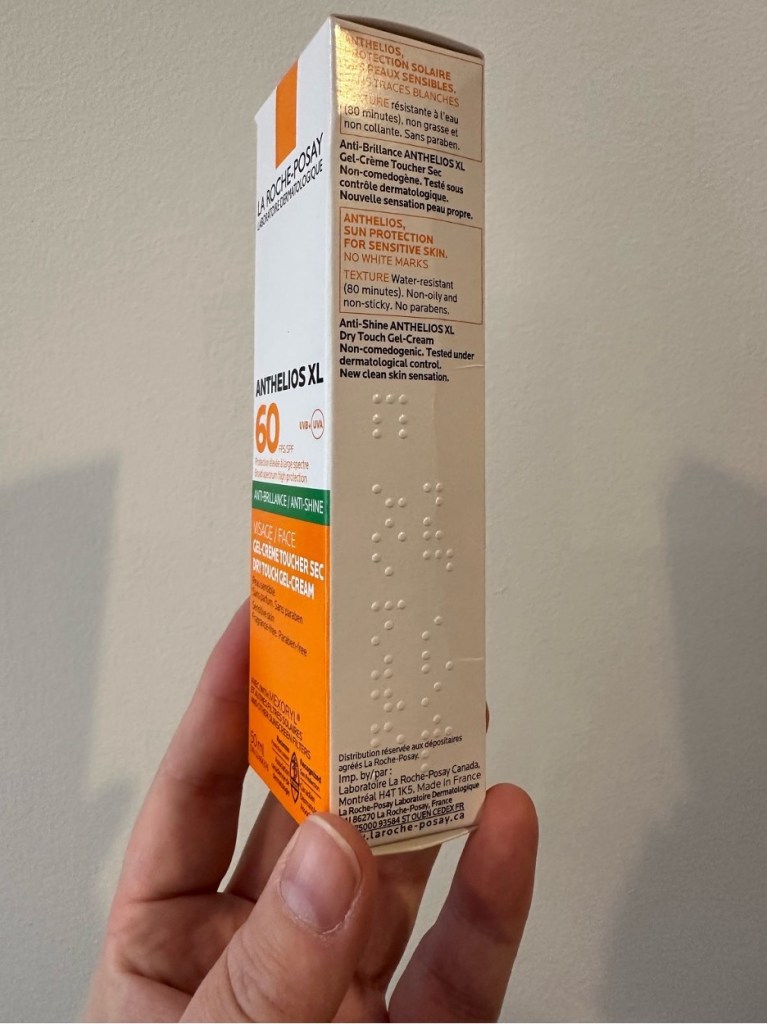
[Image description: Close-up of hands holding a braille-embossed product package from La Roche-Posay. Photo from: Christen Thomas/Linkedin.]
This thoughtful approach improves the shopping experience for blind or partially sighted customers and highlights the importance of accessibility in the beauty industry.
As more beauty brands follow suit, the beauty aisle is becoming more inclusive than ever before, with braille packaging labels paving the way for a more accessible shopping experience for everyone.
The Global Market Potential

[Image description: A smiling female cashier takes payment from a customer in a coffee shop.]
The global purchasing power of people with disabilities is a staggering $13 trillion, a figure that businesses cannot afford to ignore.
By catering to the needs of people who are blind or Deafblind through braille labels and information, businesses can tap into this lucrative market while simultaneously championing a more inclusive society.
Why Retailer Should Consider Braille
Beyond the ethical and social imperative of inclusivity, there are compelling business reasons for retailers to embrace braille.
Not only does it expand their customer base and drive sales, but it also enhances brand reputation and loyalty.
Customers appreciate businesses that prioritize accessibility, and they are more likely to support those that demonstrate a genuine commitment to diversity and inclusion.
In conclusion, the integration of braille labels and information in retail spaces is not just a matter of accessibility, it’s a statement of inclusivity and respect for all customers. Embracing braille can open up new markets and help create a more equitable society.
How We Can Help
At CNIB Beyond Print, we specialize in providing innovative solutions for enhancing accessibility in retail spaces and building a more inclusive shopping experience for all customers.
From braille labels to transcription for tactile signage, we work closely with businesses to tailor solutions that meet their unique needs and scope.
Take Action
Don’t miss out on the opportunity to make your retail business more accessible and inclusive. Contact us to learn more about incorporating braille labels and information into your business.
By working with accessibility experts and disability organizations, retailers can maximize inclusivity, ensuring equal access for all to products and services.